Peter Jorgensen
Creative Director
About
Peter Jorgensen is a creative director and free thinker born in Britain. A published author, accomplished musician, artist, and poet, his diverse interests form a syncretic field that emerges through the intersection of intuition and reason. He has a passion for questioning the roots of accepted, popular knowledge through work that critically examines the way perception and cognition are shaped and curated.
Expression
There's a 'common sense' that we choose to be who we are, but it isn't true.
Genetics hard wire significant physical and cognitive traits, influencing artistry and originality. Additionally, our early life experience isn't just a backstory, it can permanently affect genetic expression and psychological functioning. Even experiences in the womb can be life-altering, causing physiological alterations that remain until death. Similarly, traumatic events and physical disorders can influence our capacity to engage with life, sometimes in intractable ways. We don't choose this.
Some people find these facts uncomfortable. Vocalizing them can attract hostility; triggered behaviour that seeks to protect a false world view. Creativity can help express distinctive ideas and experiences, and may help erode the erroneous boundaries between the conventional and unusual, promoting value where markets frequently fail. It's normal to be unique. When people develop the capacity to explore what's within, rather than define themselves by what's outside, the less need they have to forge a sense of self through hostility and violence.
Divergence
My ancestry is fascinating.
However, it's a small part of what shapes me, not who I am. For example, I have a genetic profile linked with low motivation for financial incentives, something confirmed by independent psychometric testing. It has no association with regional origins. Additionally, while I'm highly self-motivated, my DNA framework builds a physiology that responds negatively to external pressure. It's damaging, inducing brain fog, fatigue, low mood, dysfunction, illness, and apathy; the opposite of what it's often assumed to be good for.
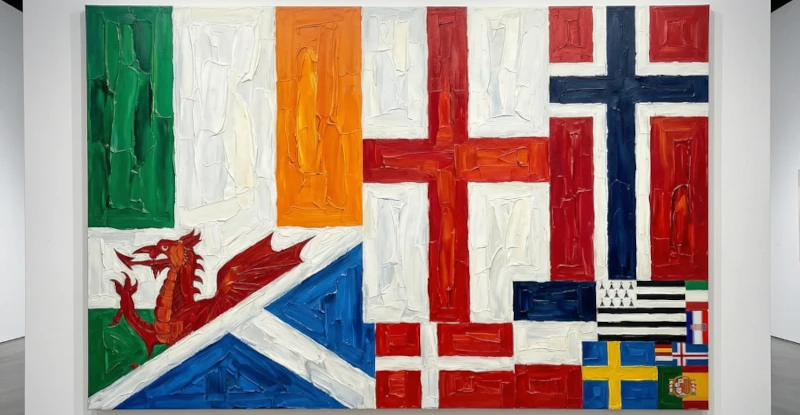
Born in England, substantial portions of my genome are reported to have origins in Ireland, Scotland, Wales, Norway, and England. It's lightly seasoned with Danish, French, Breton, German, Dutch, Icelandic, Iberian, Italian, Croat, and Swedish. Yet, I still have more in common with individuals from completely different continents and ethnic backgrounds than I do with people who have genes in the same geographical categories. It shouldn't be surprising because nationality is political, not an evolutionary trait. The labels applied to these temporally-constrained, regional genes say nothing about what they are, nor how they interact to create a unique organism. In fact, after around seven generations, the ancestry of our DNA becomes irrelevant when compared with the general population.
Diversity of Mind
Diversity isn't a recent cultural trend.
The word has been in use in English since the 14th Century, and the concept was an explicit part of 18th Century scientific rationalism, the emergence of popular democracy, and the fight to end colonial slavery. Further back, there's plenty of evidence for incredible multiculturalism in Ancient times. Despite commonplace misuse of the word, diversity isn't fundamentally about arbitrary categories of identity, fashion trends, or national borders. It's biological reality. Humans have 99.9% genetic similarity, but that remaining 0.1% is hugely significant.
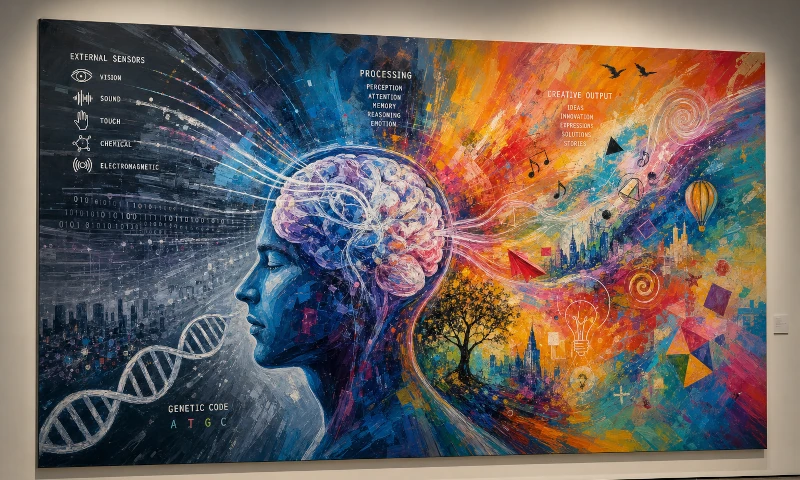
We're all different, sometimes profoundly. Estimates suggest that one third of protein-coding genes, and over half of our coding DNA, is expressed in the brain. That hidden organ responsible for perception, cognition, behaviour, and creativity is the most significant locus for human divergence, not appearance, not religion, and not nationality. It should be no surprise that the mental realm is of key significance for functionality, health, and wellbeing; homogenization being a detrimental imposition.
Focus
Can humankind ever be free?
We've tried being 'free to': free to exploit, accumulate, judge, hate, and defecate. The global culture of perpetual consumption and growth rejects the concept of 'enough'. True freedom is an illusion, but accepting that we're already 'enough' could come pretty close. When things mature, they stop growing, so the constant desire to expand, to mistake 'growth' for virtue, is a sign of juvenile development. Perhaps refocusing on being 'free from' would provide space for people to bring forth what's within them, instead of seeking satisfaction by consuming what's outside, both materially and psychologically. Could we aim for being free from toxicity, fear, ignorance, burden, war, and corruption? If that's unachievable, what does it tell us about the structure of this world we find ourselves in? What does it tell us about the true qualities of nature and what it exalts?
Action and Rest
Being and presence are of the utmost value, but they aren't busy or economically efficient.
In order to remain whole, it's essential that I engage in a variety of activities (and for the sake of my health, substantial inactivity). Creating art, music, and asking awkward and probing questions have always been part of my life. It's hard to be happy in a world that's awash with such horror, but with the help of my ARMY, I still find it possible to be at peace with myself.
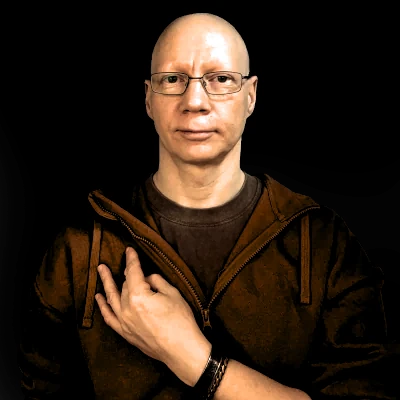
Peter Jorgensen
Creative Director
- BSc 1st Class (Hons), Horticulture (Plant Science)
Plymouth University / Eden Project Learning, England, United Kingdom - MA Dist, Environment and Development
Lancaster University, England, United Kingdom
Contact
To engage with my work, please visit my Portal Site.
For direct contact, please use this form.